Germs On Hands
Washing your hands can help to kill the germs and wash them away. The 2009 human swine influenza A H1N1 pandemic reminded health professionals and the community of the importance of hand hygiene to prevent the spread of diseases1-8 The effectiveness of hand hygiene in infection control has been recognized since Semmelweiss observation in 1847 that the implementation of hand washing reduced the number of deaths among women with puerperal fever9.
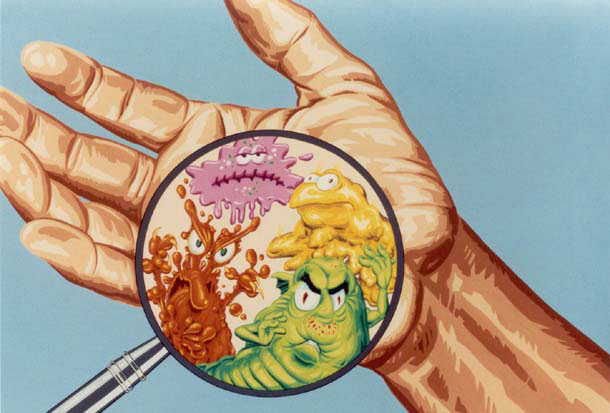
2013 E Bulletins
Coronavirus Photos Show Differences Of Hand Sanitizer And Soap Water
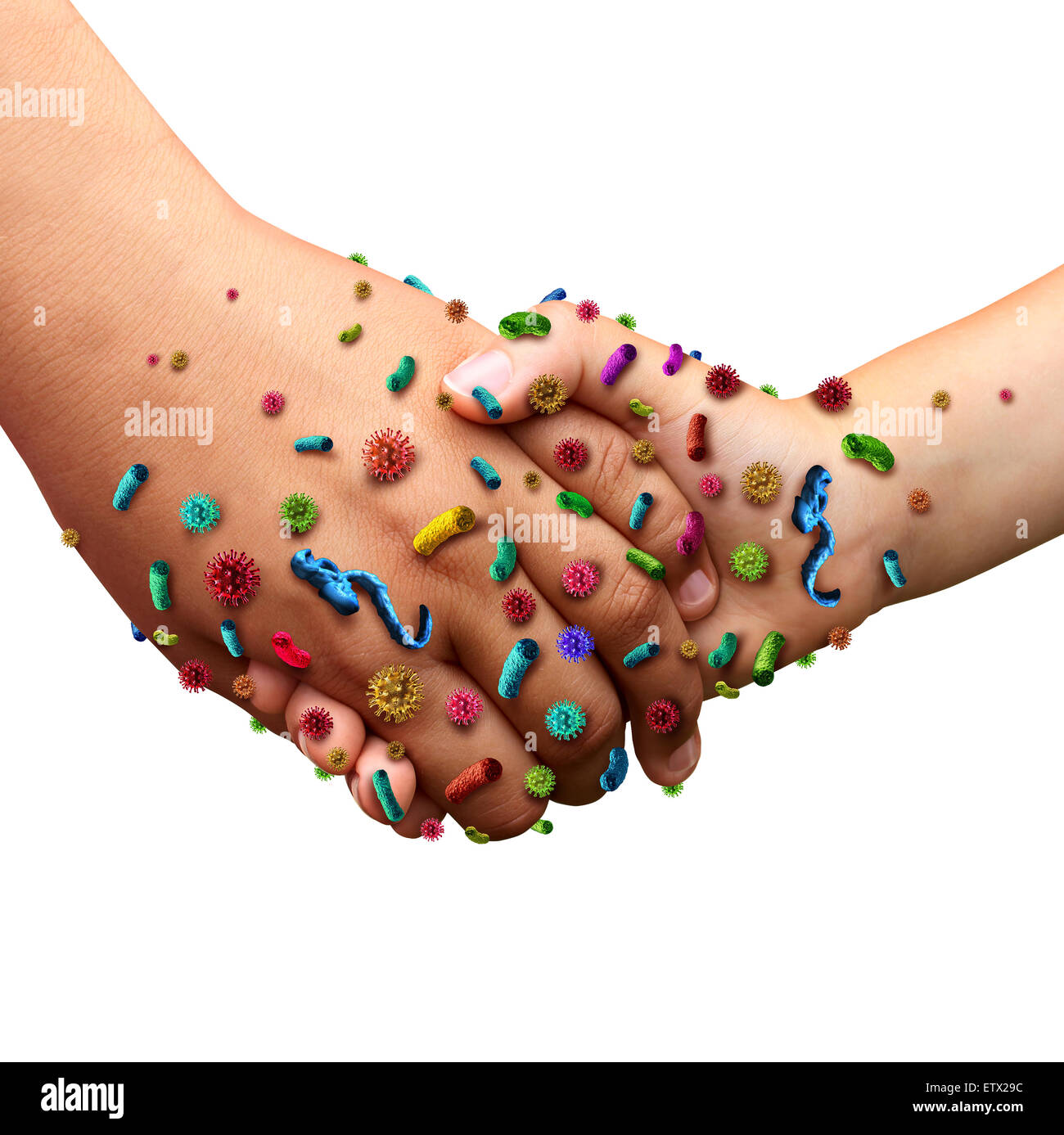
Infectious Diseases Spread Hygiene Concept As People Holding Hands With Germ Virus And Bacteria Spreading With Illness In Public As A Health Care Risk Concept To Not Wash Your Hands As Dirty
National Center for Emerging and Zoonotic Infectious Diseases Other Versions.

Germs on hands. Wash wash wash your hands Play our handy game. Rub and scrub and scrub and rub. Germs can be spread from person to person or by touching unclean equipment or surfaces.
He even forced his compulsions on those around him ordering staff to wash their hands multiple times and layer their hands with paper towels when serving his food. Germs Can Be Spread Through Contact. Some individuals move their hands quickly under a flow of water for only a second or so.
This handwashing demonstration will show you how handwashing can get rid of germs and chemicals that get on our hands every day. Germs can also spread through indirect contact if people touch something with germs already on it like a doorknob and then touch their eyes nose or mouth. But if you look at bacteria viruses and the cells they infect.
Even if you wash your hands you may not do it properly says Tierno author of The Secret Life of Germs. Dirty hands can spread all kinds of germs from the common cold to food poisoning to more serious illnesses. Hammond in 1879 when describing a case of obsessivecompulsive disorder OCD exhibited in repeatedly washing ones hands.
The term germs refers to the microscopic bacteria viruses fungi and protozoa that can cause disease. Washing hands well and often is the best way to prevent germs from leading to infections and sickness. Wash wash wash your hands Play our handy game.
Dirt goes down the drain e. The New England Journal of Medicine reports that a lack of hand-washing remains at unacceptable levels in most medical environments with large numbers of doctors and nurses routinely forgetting to wash their hands before touching patients thus transmitting. When you wash your hands with soap and water you surround any microorganisms on your skin with soap molecules.
After the song is finished use the pitcher to rinse your hands with water. Handwashing with non-antibacterial soap and water is more effective for the removal of bacteria of potential faecal origin from hands than handwashing with water alone and should therefore be more useful for the prevention of transmission of diarrhoeal diseases. Immediately dry your hands with a clean.
You may also spread your own germs or the germs you picked up on your hands to other surfaces. Hands pick up micro-organisms germs in a number of ways. Bacteria bak-TEER-ee-uh are tiny single-celled organisms that get nutrients from their.
Compliance with hand hygiene recommendations is believed to play a significant role in decreasing the risk of gastroenteric and respiratory infections12 Strict hand hygiene is even more important for healthcare workers HCW as unclean hands may. After touching these spaces can cause you to get very sick. Subscribe for more Sid the Science Kidhttpbitly1vBdUZC Join Sid as he discovers more about GermsNew videos twice a weekThe Jim Henson Company has rem.
When you touch them the germs get on your hands. Germs can spread from one person to another through direct contact when people shake hands hug or kiss. To stop the spread of germs focus your efforts on cleaning areas in the house where germs are more likely to spread such as the kitchen and toilet.
Germs can also spread in sweat saliva spit and blood. Use either soap and hot water to rinse the germs away or a disinfectant to kill them. Touching things like your face eyes mouth nose etc.
How Do I Wash. He didnt believe germs could come from him just from the outside Fowler explains. After all theyre what make you sick.
Bacteria and viruses are some of the last things you hope to encounter on a day-to-day basis. Lather your hands with soap dont forget your nails between your fingers and the back of your hands Scrub your hands for at least 20 seconds and then use a paper towel to dry them and don. After using the bathroom Before during and after preparing food Before eating food Before and after caring for someone at home who is sick with vomiting or diarrhea After changing diapers or cleaning up a child.
Wash your hands songGet this song on iTunes. Most of us do not properly wash our hands. The effect did not appear to depend on the bacteria species.
Germs go down the drain. He was convinced that he was going to be contaminated from the outside--M. Mysophobia also known as verminophobia germophobia germaphobia bacillophobia and bacteriophobia is a pathological fear of contamination and germsThe term was coined by William A.
When people who are sick sneeze or cough the germs that are making them sick are expelled into the air in tiny droplets. Some pass from person to person by touching something that is contaminated like shaking hands with someone who has a cold and then touching your own nose. Maintaining hand hygiene has been established as crucial for reducing the colonization and incidence of infectious diseases in all populations.
Rub and scrub and scrub and rub. Wet your hands with clean running water warm or cold turn off the tap and apply soap. Germs survive on hands for several minutes 12 Hand hygiene not carried out or done correctly results in hands remaining contaminated Contaminated hands transmit germs via direct contact with patientresident or their immediate environment 2 Germs transfer onto healthcare workers hands 3 4 5 1.
If these droplets get onto your hands and then you touch your mouth eyes or nose without washing away the germs you carry the infection. Mysophobia has long been related to compulsive hand washing. Steering clear of the things that can spread germs is the best way to protect yourself.
The purpose of hand-washing in the health-care setting is to remove pathogenic microorganisms germs and avoid transmitting them. The hydrophobic tails of the free-floating soap molecules attempt to. Just as a babys brain needs stimulation input and interaction to develop normally the young immune system is strengthened by exposure to everyday germs so that it can learn adapt and.
The Centers for Disease and Prevention CDC recommends a multistep process.
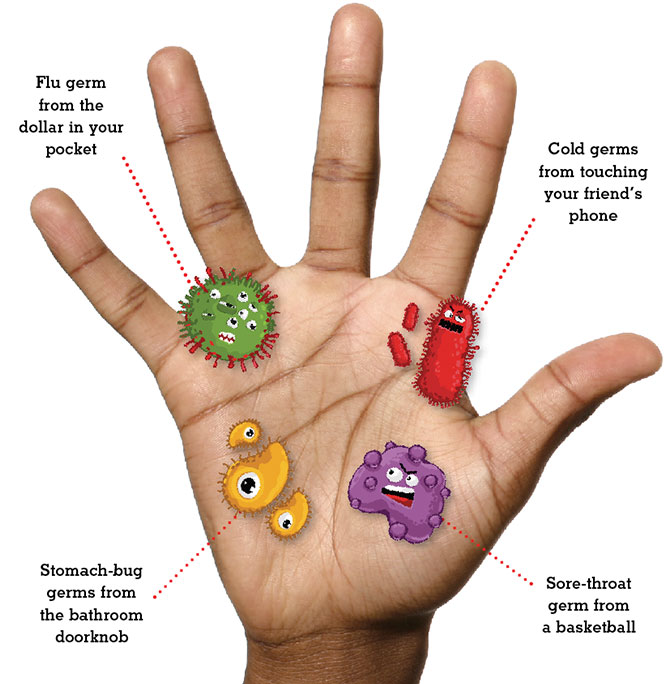
Wchd On Twitter Germs Are Found On Many Common Surfaces Hand Washing Is One Of The Best Ways To Protect Yourself And Your Family From Getting Sick Https T Co Isjlzzlmao Twitter
Germ Busters Program Uses Fun To Teach Hand Washing

Germs You Carry On Your Hands Duprex Online

5 Ways Germs Spread And How To Stop Them Cone Health Medical Group

Germs On Hands Science Project Education Com

Are You Giving Germs A Hand English Version Healthed

Hand Germs Disease Spread Dangers Spreading Stock Illustration 248158471

Frequent Questions About Hand Hygiene Handwashing Cdc


Comments
Post a Comment